
You need a scholarly or academic book for your research paper. The library has access to thousands of print and e-books in the collection, but how do you know if a book is scholarly or not?
What are you looking for?
Scholarly books, also called academic books, are written by expert researchers to share their original research with others in their field. For example, an historian writing a scholarly book is writing for other historians, and an anthropologist writing a scholarly book is writing for other anthropologists. They use the research practices of that academic discipline, and they assume a lot of shared knowledge and expertise in their readers.
A book can be high-quality, factual, and well-researched but not be a “scholarly book” in this context. When your instructor requires a scholarly book, they usually mean a book that was written by an expert, for other experts, not for the general public. You are more likely to find a scholarly book in an academic library like ours than at a public library or a bookstore.
Searching for books
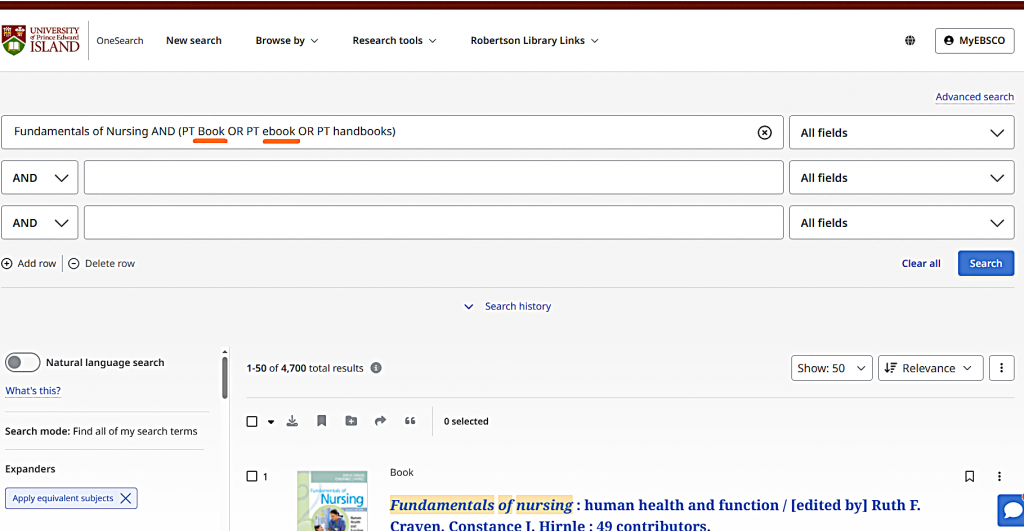
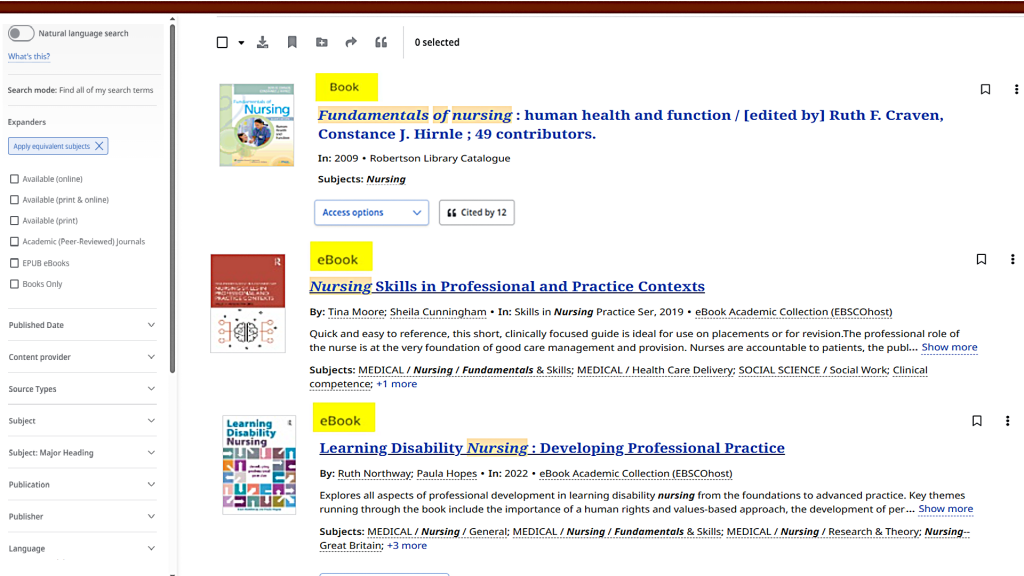
The easiest way to search all of Robertson Library’s books is to use the “Books” tab on the library homepage. When you enter your topic and select “Search,” you’ll be taken to OneSearch with some filters already in place so that you only see books.
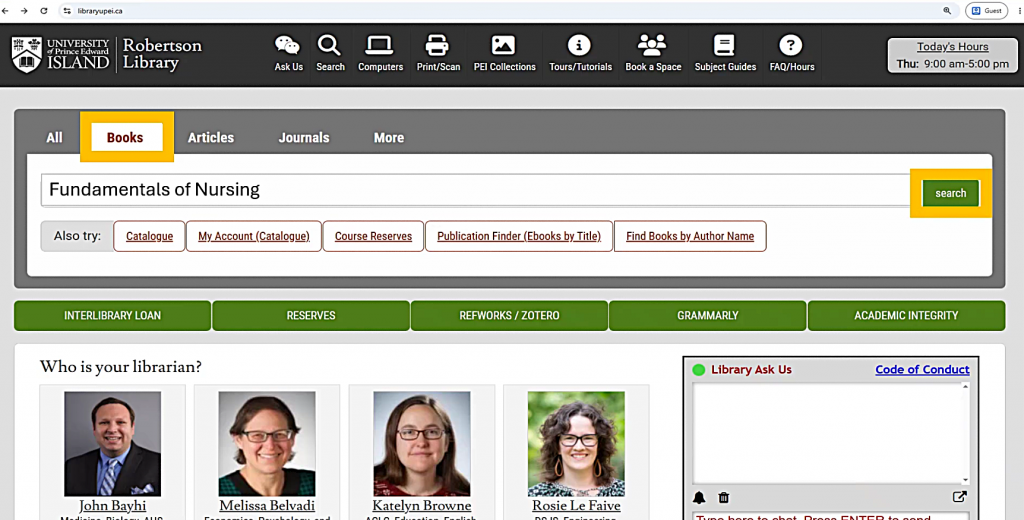
You will see results for both print books and ebooks.
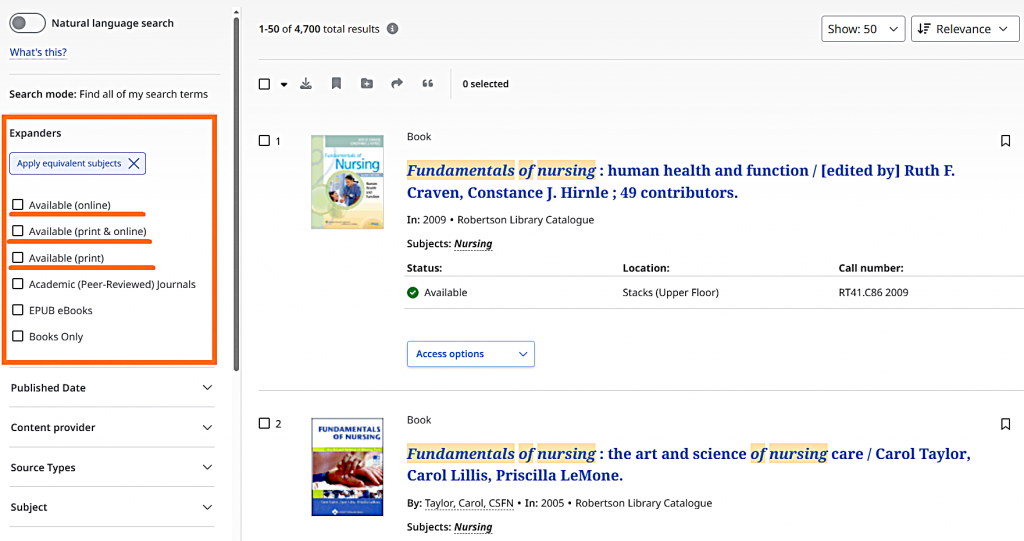
In the filters menu, you can choose to only see available items, with options to only see available online books, available print books, or both print and online books.
As you find interesting search results, here are some ways to tell whether a particular book is a scholarly book:
Have a look at the publisher.
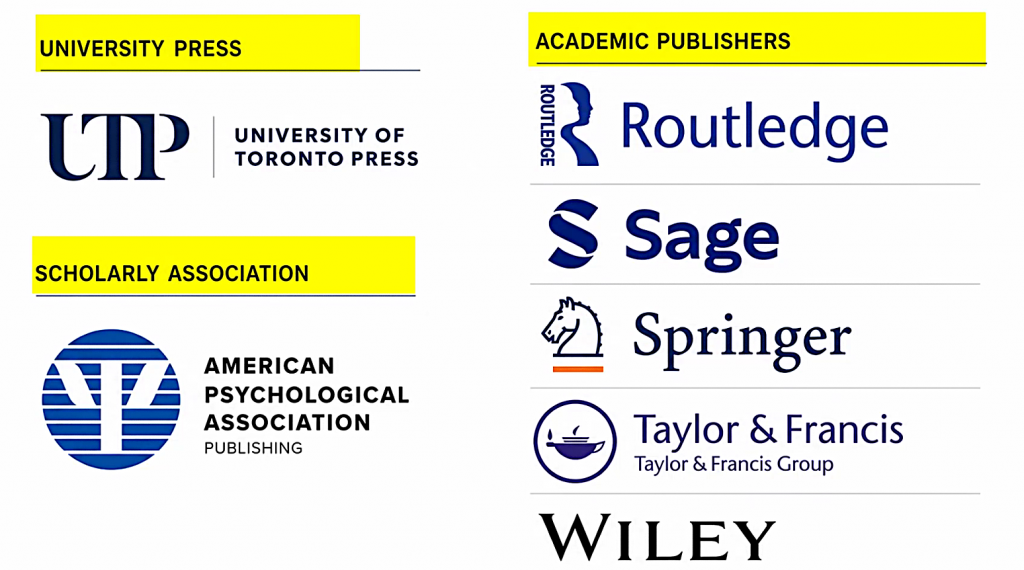
Scholarly books are often published by a university press, such as the University of Toronto Press, or a scholarly association, such as the American Psychological Association.
There are also many academic publishers of scholarly books that aren't university presses or scholarly associations, such as Routledge (rowt·lij), Sage, Springer, Taylor and Francis, and Wiley.
Looking up the publisher’s website or Wikipedia page can give you an idea of whether they publish scholarly books, books for the general public, or both.
Have a look at the author or authors.
Scholarly books are written by professors, researchers, and other experts in their field. Scholarly authors usually have advanced degrees, such as a doctoral degree, and they often work at a university, a college, or a research institute. They may also have developed research expertise through other experiences and training.
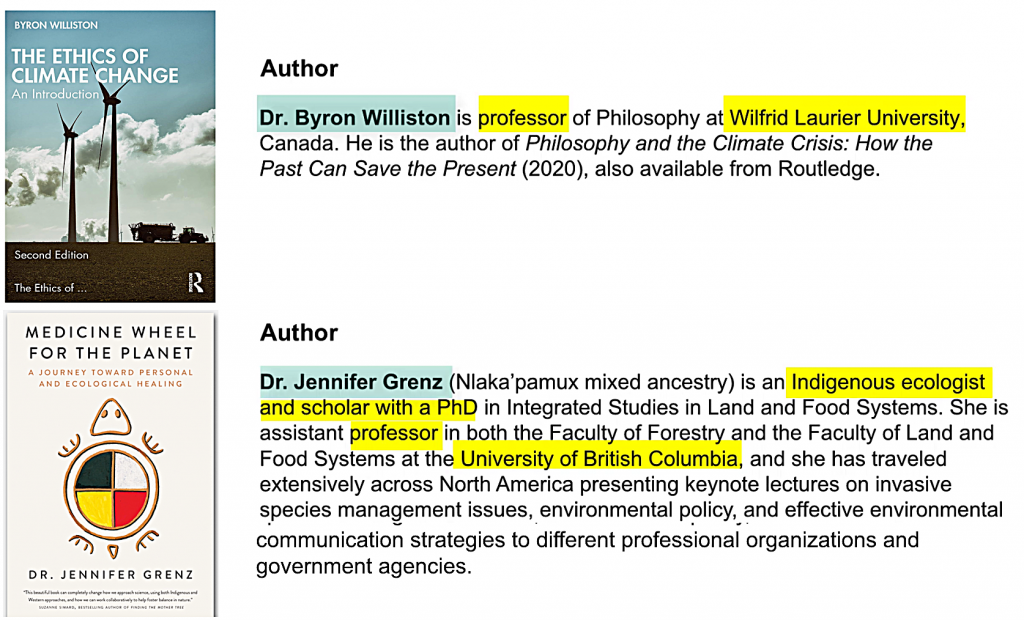
Sometimes, you'll see that each chapter in the scholarly book is written by different scholarly authors, and that an editor or editors are listed on the title page. Typically, you can use each chapter of this type of book like you would use a journal article, without having to read the whole book, and you would cite it using the “chapter in an edited book” format in your style guide.
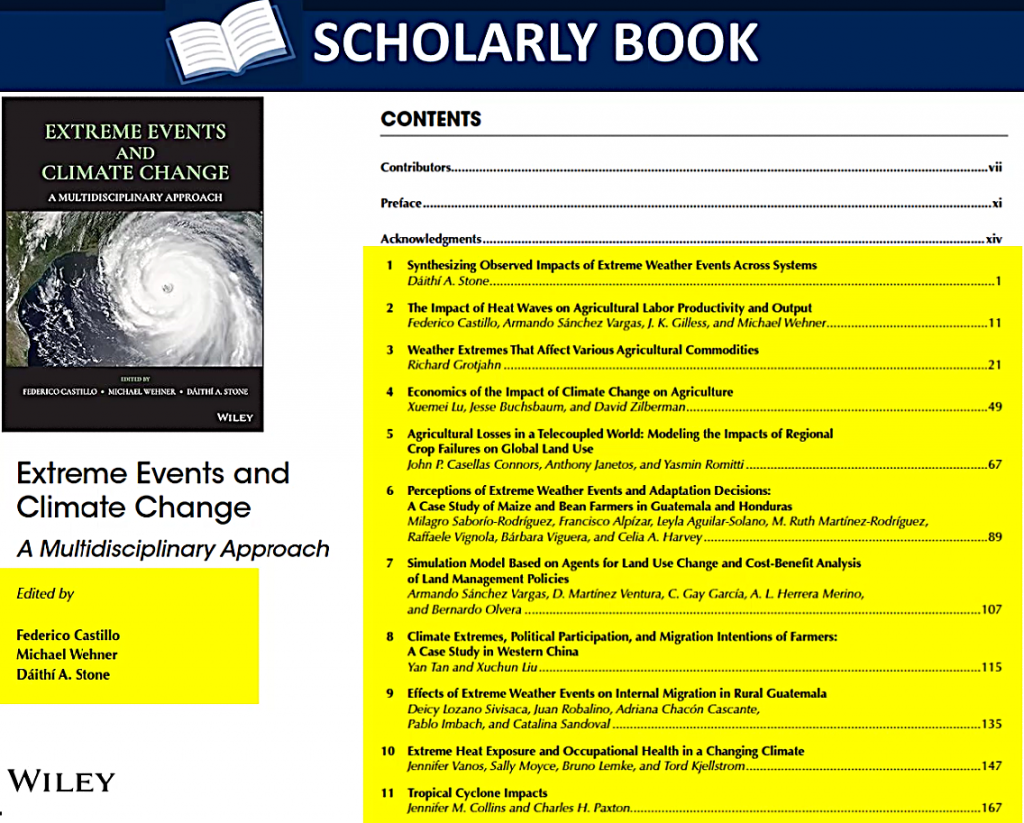
Have a look at the content.
In scholarly books, the authors typically use academic language and specialized terminology. The in-depth, scholarly content is intended for academic research and study and to expand knowledge in specialized subject areas. Just like other types of books, scholarly books may contain graphs, tables, charts, illustrations, and photos. They may also include historical sources that the authors have analyzed or annotated.
Have a look at the documentation.
Scholarly books use in-text citations, footnotes, or endnotes, and include a bibliography or a list of references in the footnotes, at the end of each chapter, or at the end of the book. These are resources that the author cited or consulted in their research, building on and responding to the research of other scholars and experts. Some popular books also include citations, so you’ll need other information to make a final decision.
Scholarly books can be in print or electronic formats. While some instructors may specifically want you to experience research with a print book or an ebook, the format of a book is not a factor in determining whether it is scholarly.
If you're still not sure whether a book is scholarly, check with your subject librarian.
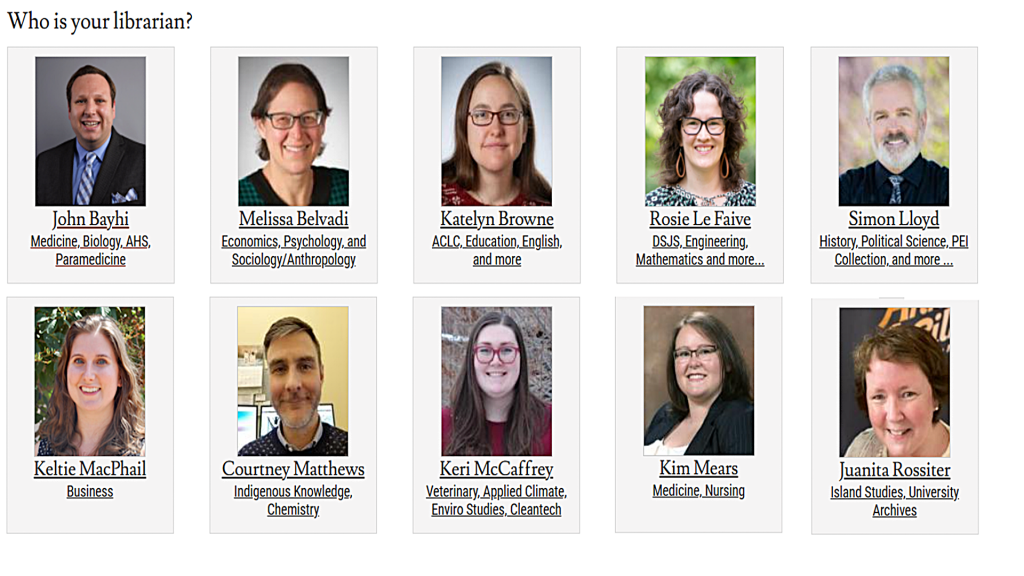
We are here for you.
A video version of this tutorial is also available.